The Biggest Obstacles LATAM entrepreneurs Face When Entering the US market
US expansion often stalls due to compliance, structure, and inventory control, which create early operational barriers.
For many Latin American entrepreneurs, expanding into the United States seems like a natural next step after consolidating sales in their home markets. In practice, however, entering the US market depends on much more than having a strong product or opening new sales channels.
One of the most common mistakes in that transition is assuming that reaching the US market is mainly about driving sales or solving product shipping. That gap between expectations and reality is one of the main reasons a promising expansion is delayed and becomes more expensive.
The First Point of Friction Is Not Always What Entrepreneurs Expect
When an entrepreneur in LATAM starts planning an expansion into the United States, the first concerns are usually logistics, inventory, and regulatory compliance. However, as Adrián Álvarez, Managing Partner at Midas Consulting, points out, “if you do not have a product adapted to what the American market needs, you can have all of that in place and it still will not work”. Before discussing operations, then, there is a more basic question to answer: whether the offer is truly aligned with demand, expectations, and the commercial logic of the US market, which is far from homogeneous.
Juhi Naithani, Co-Founder of Fracxnal, emphasizes two major barriers. First, she notes that “US tax and compliance enforcement and documentation expectations are stricter and more audit-driven”. She also explains that “structuring the US entity and its relationship with the parent organization has many repercussions, including transfer pricing processes, which companies often disregard, leading to issues later on”.

Along the same lines, Riley Doudna, Founder and Managing Partner of Andes Edge Consulting, argues that many Latin American entrepreneurs underestimate what it really means to operate legally within the US system: “I mean having a local structure that actually works: an operational bank account, a tax address, a registered agent, a defined tax nexus and someone who understands state-by-state sales tax obligations”.
Soft Landing Remains a Key Factor for Lower-Risk Market Entry
For years, soft landing was associated with a fairly basic idea of market entry: an address, some physical space, and a certain network of contacts. However, Doudna believes that the concept has evolved.
“Today, real soft landing is operational: having access to warehousing infrastructure, logistics execution, legal support and a network that allows you to make fast decisions without being physically present”, he says. Naithani reinforces that point: “if this is the model presented, soft landing is a must for any foreign business looking to succeed in the United States”.
Currently, as Álvarez explains, “having a soft landing model is essential because it gives you market validation, helps with regulatory setup, provides initial infrastructure, and may even open the door to key introductions”. Its value lies not only in supporting the landing itself, but in preventing costly detours in time and money during the most sensitive phase of expansion.
Regulatory and Customs Knowledge Can Stall Expansion Before It Begins
Among all the factors that delay or complicate entry into the United States, regulation is often one of the least visible at the outset. It may not look like the main risk in the early stages, but when something goes wrong, the impact tends to be immediate: goods held up, extra costs, penalties, wasted time and damage to the customer experience.
The lack of knowledge matters “a great deal, because the IOR/EOR setup cannot be improvised from abroad”, according to Álvarez. He also stresses that import classifications, local requirements and those formal roles must be addressed from the start rather than treated as a later correction, because “the product may even be illegal or require changes to comply with regulation”.
Doudna shares that view and explains that “in the US, you cannot simply ship a product and expect it to arrive. You need an IOR with a legal presence in the country, correct tariff classification, compliance with FDA regulations if your product is for consumption and a clear understanding of the rules in each state where you plan to sell”. As for the consequences of regulatory blind spots, he adds that they “do not always cause immediate failure, but they often cause something almost worse: delays that kill momentum”.
Naithani frames the issue in business terms: “Lack of knowledge of US regulatory and customs mechanics has the ability to not just slow down business expansion, but stop or stall it detrimentally”. The consequences are not only operational. A shipment that is held, rejected or destroyed because of incorrect documentation or non-compliance can affect revenue, generate additional charges and erode customer trust even before the operation is fully established.
Scaling From LATAM Requires Real-Time Inventory Visibility and Faster Response Times
For entrepreneurs selling through e-commerce or marketplaces, entering the United States is not only about having a product available. It also means sustaining an operation with visibility, traceability and responsiveness from a distance. That is where another common friction point appears: trying to manage an operation spread across multiple players, time zones and systems without connected infrastructure.
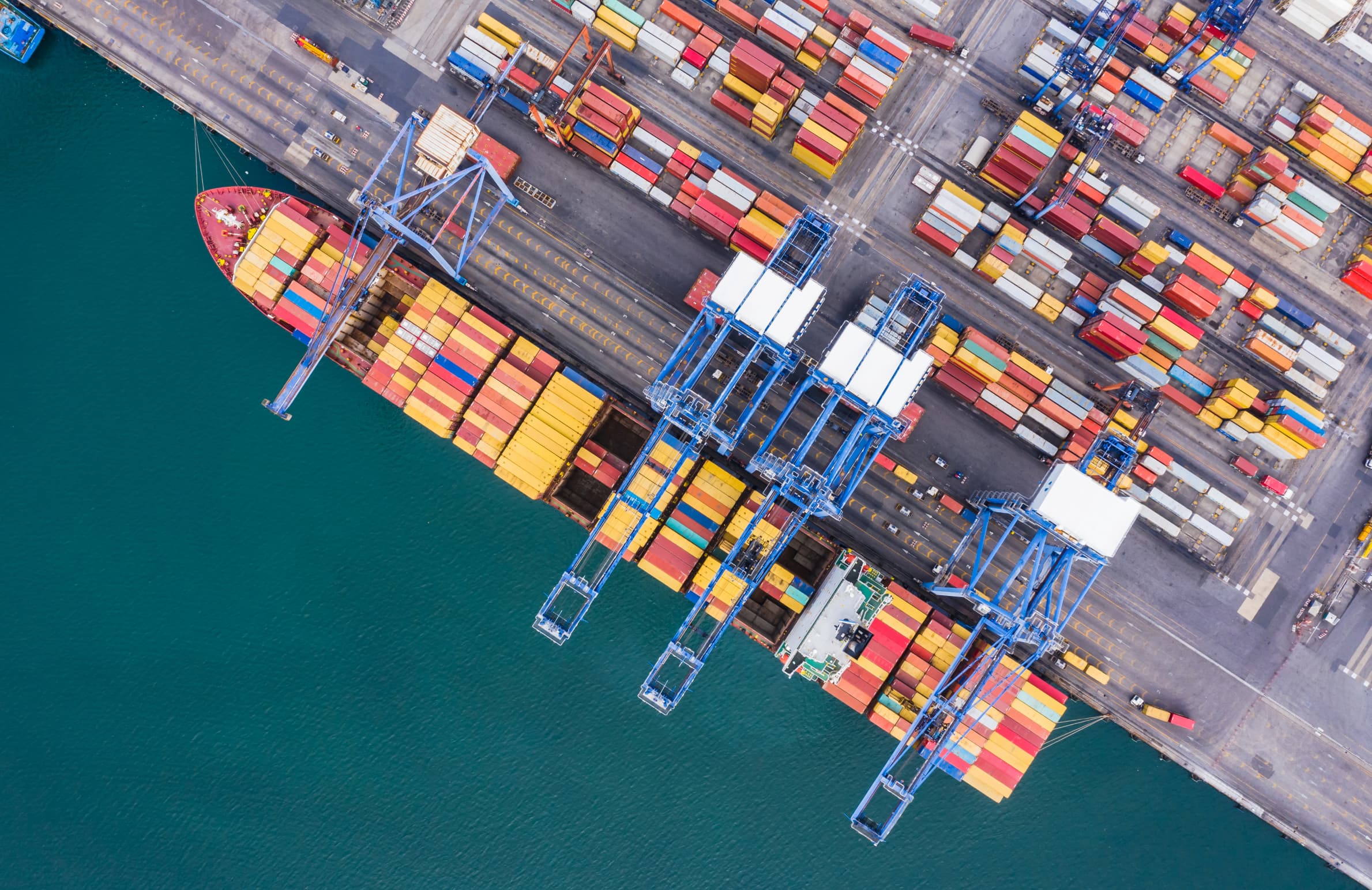
Naithani explains that inventory is often split across warehouses in LATAM, goods in transit and US logistics operators. “A lack of integration across these platforms can lead to over or underselling, which further impacts seller performance metrics and ranking”, she says. This affects not only actual stock availability, but also seller performance, reaction speed and the end-customer experience in a market accustomed to fast delivery and precise tracking.
According to Doudna, entrepreneurs often lose control of their inventory “as soon as they start to scale. They do not have integrated systems that tell them in real time how many units are available, how many are in transit and how many need to be replenished”. In response, he notes that “the solution is not necessarily expensive technology. It is having a connected system: a 3PL that offers real-time inventory dashboards, is integrated with your sales channel and has automatic replenishment alerts”.
That is why operational visibility is no longer a differentiator. It has become a basic requirement. Having access to inventory data in real time, knowing what is available, what is in transit and when replenishment is needed allows entrepreneurs to make better decisions from Latin America instead of operating blindly. In the US market, where the commercial promise is tightly linked to logistics execution, that responsiveness is central to competitiveness.
How AeroWork Can Become the Partner Your Consultancy or Agency Needs
AeroWork strengthens consultancies and agencies that provide US market entry services by serving as their local operating arm. While the consultancy leads strategy and manages the customer relationship, AeroWork delivers execution: soft landing, fulfillment, warehousing, office solutions, logistics compliance, and bilingual support.
If your agency or consultancy supports companies expanding into the US, AeroWork can be your operational partner.
Contact us to explore a collaboration partnership and build a more complete, scalable, and high-value solution for your customers.