Amazon FBA Prep: Compliant Kitting, Labeling, and Bundling Solutions

Learn how compliant Amazon FBA prep, including kitting, labeling, and bundling, helps sellers meet marketplace requirements, protect inventory accuracy, and operate more efficiently.


Becoming an Amazon seller represents a tangible growth opportunity. It offers access to the US market, higher brand visibility, dollar-based sales, and the ability to use one of the world’s most powerful logistics networks. However, selling on Amazon begins long before the product listing goes live. It starts with how inventory arrives, undergoes inspection, receives labels, is grouped, prepared, and shipped to Amazon fulfillment centers. This process is known as FBA Prep.

Why FBA Prep Matters for Frictionless Sales

FBA Prep covers the operational tasks required for a product to enter the Fulfillment by Amazon network. It includes product inspection, packaging, quantity checks, fragile-item protection, barcode review, bundle preparation, and validation that each unit matches the information uploaded to Seller Central.

At AeroWork, we can manage this process at our Miami warehouse, supporting brands in preparing inventory for FBA, reducing operational errors, and optimizing costs tied to extended storage and other Amazon FBA fees that companies often overlook at the start. We give brands the flexibility to store inventory with no volume minimums, paying only for the space they actually use. 

Kitting for Amazon FBA: Turning Components into a Sellable Unit

Kitting groups two or more components into a single commercial and logistics unit.

It may apply to:

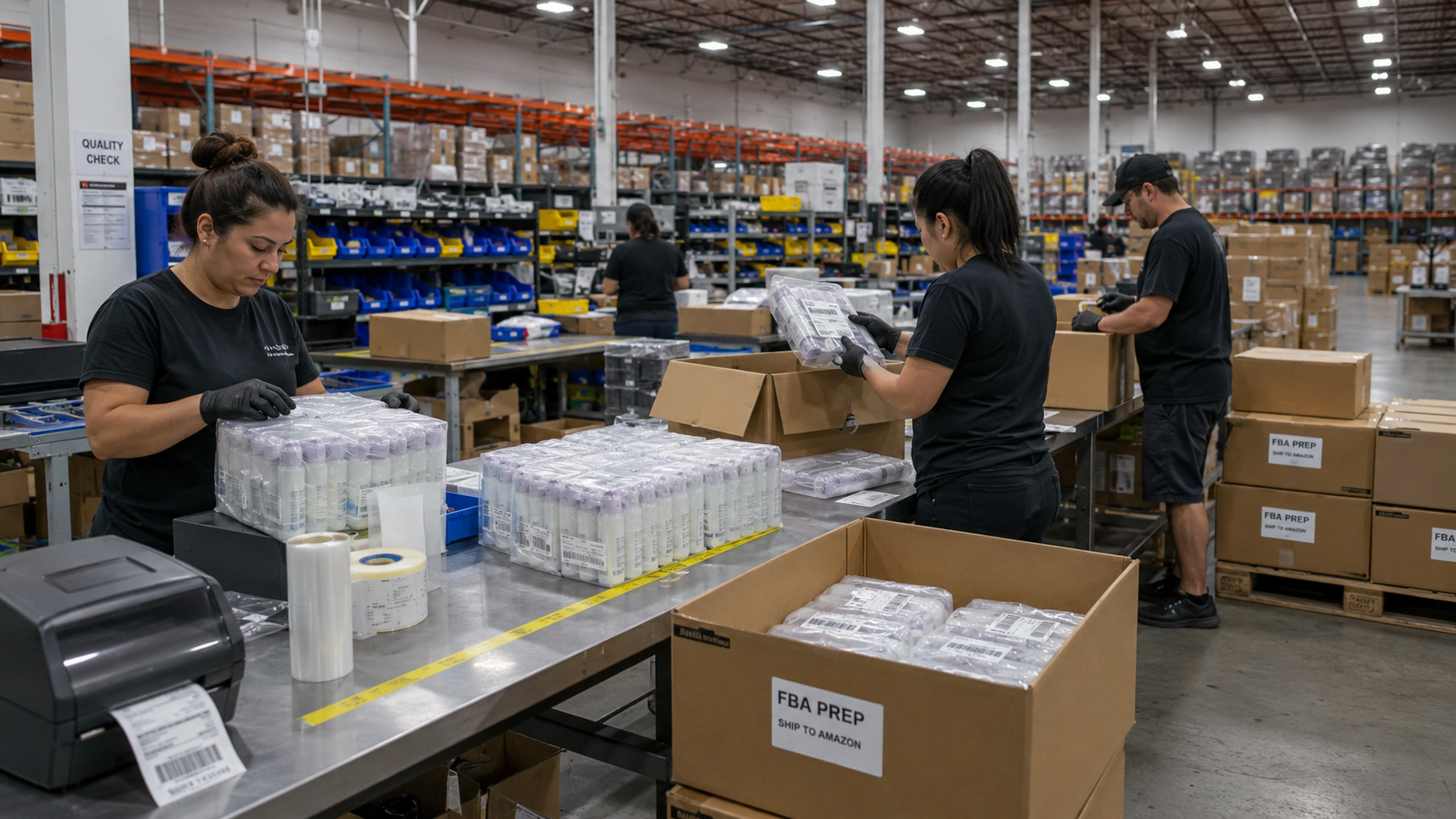
Amazon FBA Prep team preparing bundled products, applying barcode labels, and packing cartons for shipment.
Professional fulfillment warehouse where an Amazon FBA Prep team inspects, bundles, labels, and organizes products into compliant cartons ready to ship to Amazon.

The main rule is: when the customer purchases the kit as a single unit, Amazon must receive it, store it, and ship it as a single unit. To achieve that, the kit needs proper closure, identification, and labeling. The logistics operator or the fulfillment center should never have room to interpret how to process it.

FBA Labeling: One of the Most Expensive Mistakes for Amazon Sellers

Labeling ranks among the most sensitive aspects of FBA Prep. Amazon relies on scannable codes to identify each unit within its logistics network. When a label sits in the wrong place, cannot be read, appears more than once, or links to the wrong product, the inventory may face delays and additional costs.

Many sellers underestimate this stage. They see labeling as a mechanical task, whereas it actually serves as an operational compliance requirement. To prevent these errors, each product needs a prior review. The label must remain visible, flat, scannable, and linked to the correct SKU.

Amazon Bundles: How to Prepare Them While Meeting Operational Rules

A bundle brings two or more complementary products into a single offer. This sales strategy can help increase the average order value, differentiate a product, or create a stronger value proposition.

The bundle needs a clear commercial rationale, its own identification, and proper physical preparation when the brand ships it as an FBA unit. For a physical bundle, Amazon must receive it closed, protected, labeled, and ready for processing as one unit.

The brand builds a physical bundle before it reaches Amazon. This requires preparation, packaging, labeling, and physical control. It works well when the brand wants to control presentation, packaging, the unboxing experience, or the final product set.

Hidden Amazon FBA Costs You Should Also Consider

Proper FBA prep serves to prevent operational friction, but other factors also affect margins. Sellers must also account for costs tied to storage, inventory turnover, and inefficient use of FBA.
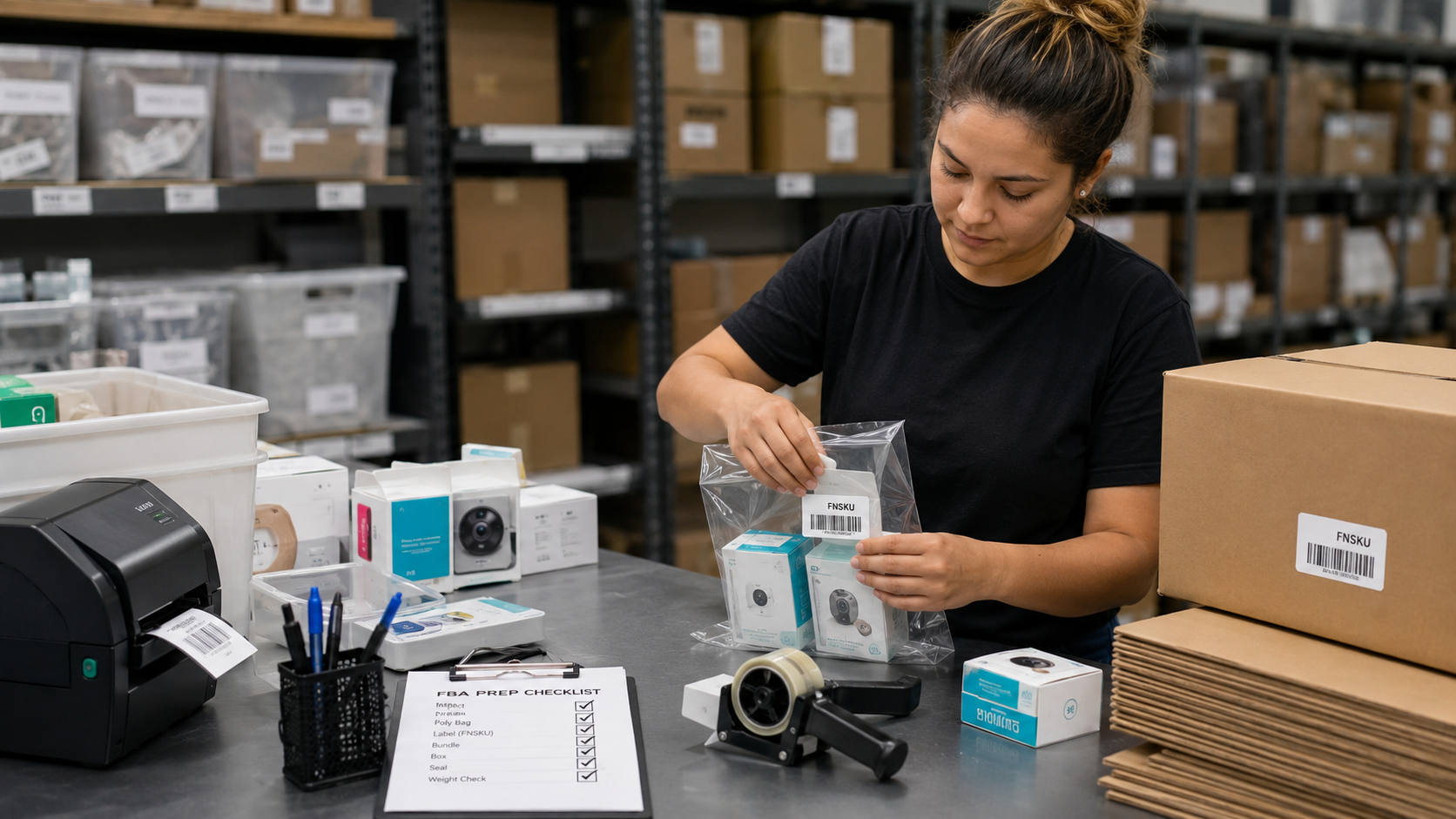
Amazon FBA Prep worker labeling bundled products with FNSKU barcodes at a warehouse packing station.
Realistic warehouse scene showing Amazon FBA Prep services, including compliant kitting, poly bagging, FNSKU labeling, bundling, and quality control before shipment.

Many sellers underestimate costs such as:

For this reason, a strong Amazon selling strategy should account for two operational priorities: proper inventory preparation before shipment and disciplined stock allocation to Amazon’s fulfillment network.

At AeroWork, we support both fronts. Learn how AeroWork can support your brand in preparing, storing, and shipping inventory for Amazon FBA from Miami.

Contact us to discover a flexible solution for selling on Amazon with greater control and fewer hidden costs.

 

How to Avoid Amazon’s Long-Term Storage Fees

Long-Term Storage Fees have a direct impact on seller profitability. Storing part of the inventory outside of Amazon's warehouses reduces exposure to penalties.


Although Amazon is often the first choice for entrepreneurs looking to scale their online sales in the US, the marketplace also imposes certain costs that can affect profitability. One example is Long-Term Storage Fees (LTSF), which play a central role by penalizing inventory that remains in Amazon’s logistics network for an extended period.

Understanding how these fees work and which operational decisions can reduce their impact is a key factor for any seller seeking to grow and optimize sales in the United States’ largest marketplace.

What Long-Term Storage Fees Are and How They Work

Long-Term Storage Fees (LTSF) are additional charges applied by Amazon FBA to inventory that remains stored for extended periods in its fulfillment centers. In other words, when a product exceeds certain storage time thresholds and fails to achieve the expected turnover, it begins to incur additional costs associated with aging inventory.

The Cost of Keeping All Inventory in Amazon and How to Avoid It

One of the most common mistakes companies make when selling on Amazon FBA is sending all their inventory to Amazon and keeping their entire available stock there. Although that may seem simpler at first, over time it often results in less flexibility, a higher risk of overstock, and greater exposure to Long-Term Storage Fees.

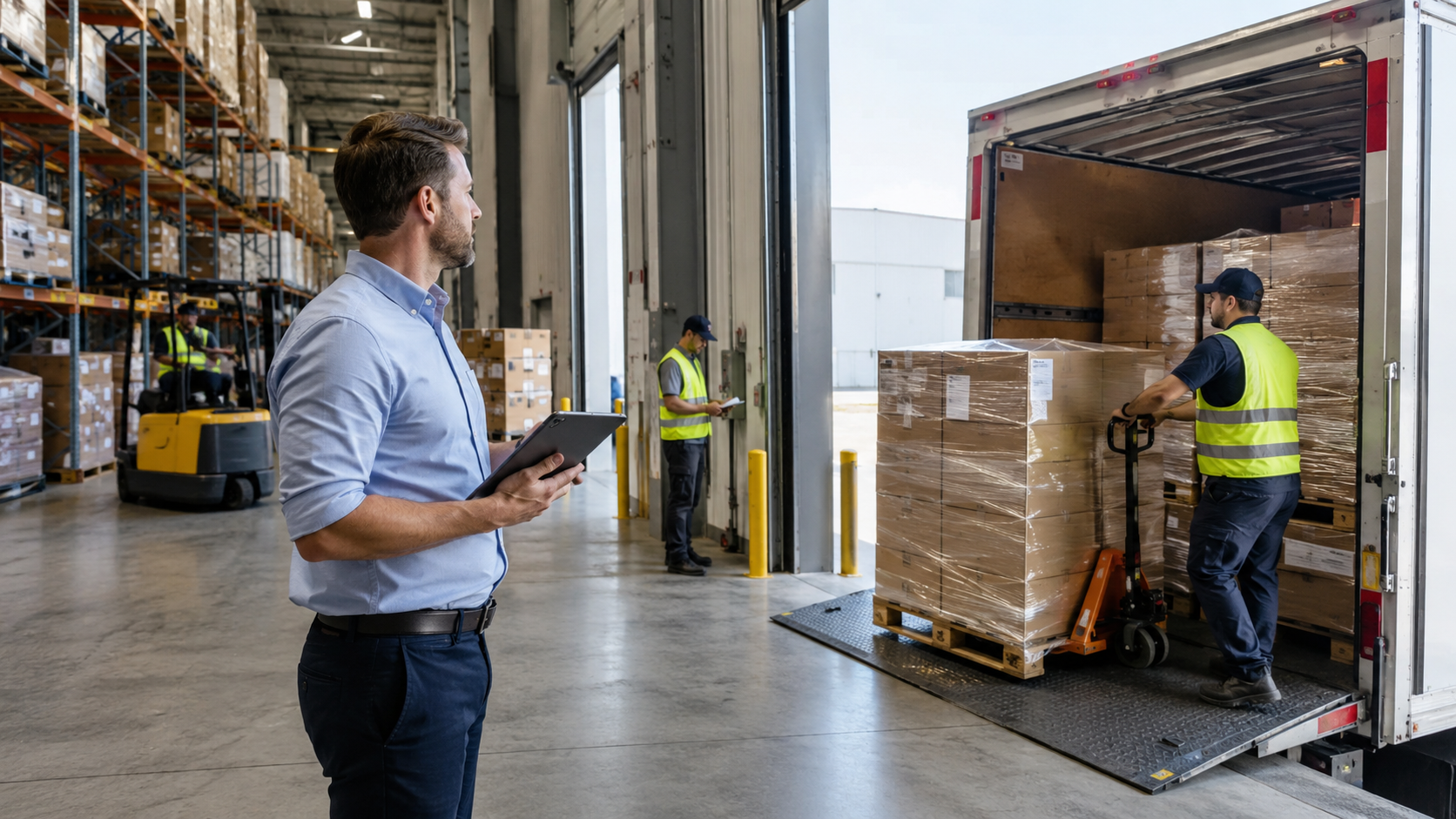
Logistics manager supervises pallet loading at a warehouse dock as part of a replenishment strategy to reduce Long-Term Storage Fees.
A realistic loading dock operation where palletized inventory is prepared for shipment. The image represents a hybrid FBA and 3PL model that allows sellers to replenish Amazon gradually, reduce overstock risk, and avoid Long-Term Storage Fees.

Avoiding this does not require abandoning Amazon FBA. It means changing the replenishment model so that Amazon remains part of the operation without becoming the sole inventory location.

A Hybrid FBA + 3PL Model to Reduce Exposure

An effective way to reduce risk is to operate under a hybrid model. What does this mean?

A portion of the inventory remains at Amazon, while the rest is stored at facilities operated by an external logistics provider, such as AeroWork. This allows the company to gradually replenish stock on Amazon, without sending more volume than necessary to the platform’s fulfillment centers in advance.

This model allows keeping backup inventory outside Amazon and using FBA more tactically, with greater control over timing, quantities, and turnover. This supports companies in:

How AeroWork Helps Reduce LTSF and Improve Inventory Control

At AeroWork, we mitigate the risk of Long-Term Storage Fees (LTSF) by offering a more flexible model that avoids keeping excess or slow-moving inventory in Amazon FBA for extended periods. Instead of tying up stock and absorbing escalating penalties, brands can relocate inventory to our AeroWork warehouse in Miami and use it as a backup operational base to replenish Amazon in a phased manner, aligned with demand and turnover.

Concerned seller reviews warehouse inventory on a tablet while evaluating the impact of Long-Term Storage Fees.
A realistic warehouse image showing an operations manager reviewing stored inventory on a tablet. The scene highlights how excess stock and slow-moving products can increase Long-Term Storage Fees and affect seller profitability.

In addition, we offer a flexible storage structure, with no minimum volume requirements and a prorated fee based on the space actually used. This allows growing brands and established sellers to manage inventory more efficiently, avoiding oversized operations and fixed costs that do not reflect actual activity levels.

At the same time, this approach provides the agility required to adapt logistics to changes in demand, seasonal peaks, or new stages of growth. We also support Amazon sellers with external storage, FBA prep, labeling, kitting, quality control, and remote product inspections.

To learn more about our services, avoid Long-Term Storage Fees, and assess a structure customized to your Amazon FBA operation, contact our team.

How to Improve Your Amazon FBA Margins

Amazon FBA can erode profitability through fees, surcharges, and penalties that increase costs and add strain to day-to-day operations.


In many cases, hidden costs in Amazon FBA become a silent threat to sellers’ margins. Although the system offers logistics advantages and greater visibility within the world’s largest marketplace, behind that structure lies a framework of fees, surcharges, and penalties that can weigh on profit.

These costs often occur in sequence, deepening the financial impact of the operation. Inventory that does not move on time can lead to higher storage fees, trigger aged-inventory penalties, and at the same time tie up working capital that the seller needs to replenish better-performing products.

That is why understanding how each of these additional costs works is key to assessing the real exposure associated with selling through Amazon FBA and preventing profitability from being constrained by expenses that, in many cases, go unnoticed at the outset.

Three Hidden Costs of Selling Through Amazon FBA

Long-Term Storage

Aged Inventory Surcharges begin to apply once products have been in storage for 181 days or more and increase over time. In the 6- to 12-month range, the fee is US$0.30 per unit per month, twice the 2025 rate. For goods stored for more than 15 months, the charge can reach US$7.90 per cubic foot or US$0.35 per unit.

This is added to the standard monthly storage fee during the low season, set at US$2.40 per cubic foot for standard-size items, along with storage utilization surcharges, which can reach US$1.88 per cubic foot when inventory exceeds 52 weeks. In practice, this can result in very high monthly charges. For example, 150 units occupying 1 cubic foot each, stored for more than 365 days, can amount to roughly US$1,035 per month.

Penalties

These charges are accompanied by additional penalties that further raise operating expenses. One example is the Low Inventory Fee, which ranges from US$0.32 to US$2.09 per unit when an FNSKU falls short of 28 days of stock coverage. The fee now also applies to bulky items.

At the same time, inbound defect penalties have increased sharply, rising from US$0.32 to US$5.72 per unit, with jumps of 10 to 80 times previous levels. In addition, since January 2026, Amazon FBA has stopped reimbursing certain preparation and labeling costs. Sellers may also face space overuse surcharges ranging from US$0.44 to US$1.88 per cubic foot, along with inventory removal fees of US$1.04 to US$14.32 per unit.


Capital Tied Up

Slow-moving inventory ties up working capital for extended periods. A product stored during the low season carries a base cost of US$2.40 per cubic foot, rising to US$3.63 in the fourth quarter, excluding any additional surcharges. 

At the same time, an Inventory Performance Index (IPI) below 500 can restrict storage capacity. This forces sellers to operate between two risks: overstocking or stockouts, both of which affect cost structures and sales performance. In parallel, fulfillment fees are also rising, with an average increase of around US$0.08 per unit, reaching as much as US$0.51 for products priced above US$50.

Keys to Improving Profitability in Amazon FBA

AeroWork positions itself as a logistics partner that complements Amazon FBA operations and supports companies to run more efficiently.

How to Optimize Costs and Inventory in Amazon FBA

One of the foundations of AeroWork’s model is its US logistics infrastructure, including a Miami warehouse that serves as an inventory management and preparation center. This hub allows brands to manage stock outside Amazon and send replenishment shipments in a planned manner, thereby avoiding penalties tied to excess inventory and long-term storage within the Amazon FBA logistics network.

As a result, companies can store goods, organize shipments, and supply Amazon fulfillment centers based on actual demand. This leads to more predictable inventory movement, reduced exposure to additional charges, and improved stock turnover.

Operational Flexibility and Remote Support for Amazon FBA Sellers

AeroWork delivers an adaptable warehousing model, with no minimum inventory requirements and a prorated billing structure based on the square footage actually used. This allows both growing brands and established sellers to manage inventory without committing to large amounts of space or taking on unnecessary fixed costs. At the same time, this service makes it easier to adjust logistics activity in line with business performance or sales seasonality.

In addition, AeroWork serves as an operational extension of the seller’s team. Through what it calls remote support, the warehouse can conduct physical inspections, quality reviews, and product checks in less than 24 hours. This gives brands the ability to oversee inventory without maintaining their own staff in the United States, while retaining full visibility over their goods even at a distance.

To learn more about our services and assess ways to improve your operation, you can contact AeroWork for guidance and review a solution tailored to your brand’s needs.