The Role of Logistics and Customs Compliance in Entering the US Market
Entering the US market requires companies to prepare their operations to import, store, and sell while meeting customs requirements, maintaining inventory control, and supporting scalable growth.
Many Latin American brands assume that entering the US market depends on launching sales, opening an online store, or starting operations on Amazon. However, expansion depends on how the company structures its operations, where it stores merchandise, and how prepared it is to meet US market requirements.
When a company aims to sell in the US on a sustained basis, the merchandise must enter the country through formal import procedures, remain available for warehousing or fulfillment, and, in many cases, meet specific requirements for labeling, documentation, tariff classification, or category-based regulations. At this point, logistics and customs compliance become core drivers of growth.
When Courier Shipping No Longer Meets the Need
In the early stages, many brands use traditional courier services for their shipments. This model may work for samples, individual products or small volumes. However, when a company needs to bring merchandise into the country for storage, fulfillment or commercial distribution, the operation requires a stronger structure.
In this context, Gonzalo García, Founder and CEO of Markentry USA, notes that “the standard solution is to operate through an IOR and a licensed customs broker that manages clearance with US Customs and Border Protection”. In these cases, the IOR may be the company itself, provided it has a US entity or a third-party provider that coordinates customs clearance, documentation, tariff classification, valuation, payment of duties and taxes and product-specific regulatory requirements.
Lisandro Mogliati, Principal at Licenciado Mogliati, shares this view and clearly summarizes the shift in scale. “The company builds a more professional operation by bringing in other core partners. A freight forwarder transports the cargo into the US, while a customs broker takes charge of the full customs clearance process, including documentation, duty payment and release at destination. At that point, the merchandise goes directly to a warehouse ready for fulfillment”, he explains.
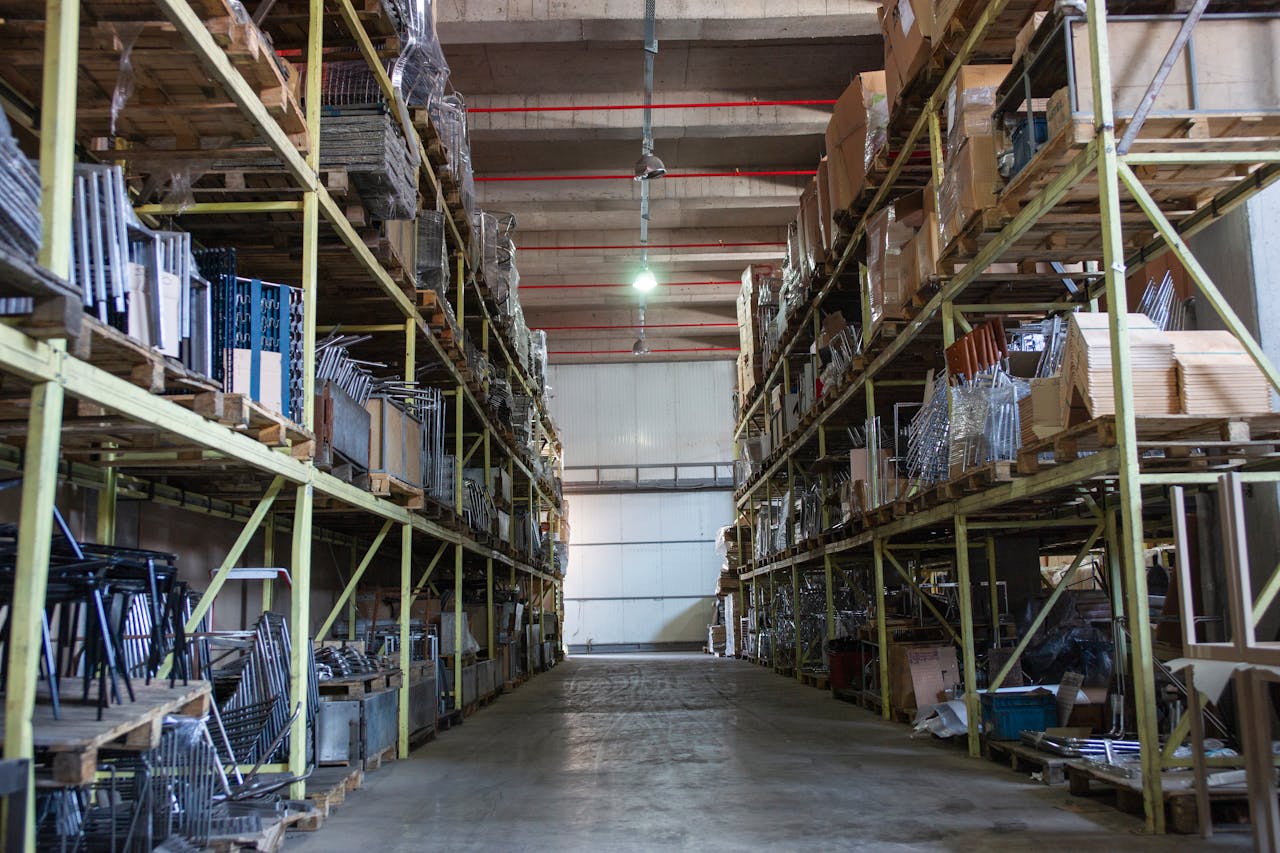
The objective extends beyond getting cargo into the country. As Esteban Leiva, CEO of Group Eleva, explains, this structure also allows companies to “process formal entries of palletized cargo or containerized freight, resolve customs clearance and documentation, coordinate US storage and fulfillment, integrate retail, supermarket or e-commerce distribution, and prevent rejections, delays or regulatory issues at customs”.
Selling in the US Without a Company-Owned Operation Is Possible
One of the game changers in international expansion is that brands no longer need to build a full physical footprint in the United States before they start selling. They do not always need to lease a warehouse, hire local staff, or open offices on day one.
In this regard, García states that “many brands adopt an asset-light model by relying on marketplaces such as Amazon FBA or other sales channels, along with 3PL providers that cover storage, order preparation and returns”. In some cases, the company can sell as a foreign entity. In others, it may create a US LLC with no employees, depending on its commercial and tax model.
This structure “typically covers the formal import of merchandise into the US, the use of external 3PL warehouses and fulfillment operations, integration with Amazon, Walmart Marketplace, Shopify or other channels, order preparation and dispatch from the US, outsourced storage management, packing and shipping, and support with compliance, FDA, labeling and commercial documentation”, Leiva says.
For brands validating demand, this model lowers initial risk, since it “allows them to start without large investments, test the market on a limited scale and scale in line with demand”, Mogliati says. Ultimately, “it allows companies to enter the US without heavy fixed costs and with a flexible structure”, he adds.
Direct Imports Through a Third Country Demand Coordination
Another increasingly common scenario involves brands that operate in one country, manufacture in another and want to sell directly in the United States. Although this may appear technically demanding, companies use this model regularly when it is properly structured.
According to Leiva, “the process does become more technical and strategic, yet today it represents a fully viable operation that international brands use more often as they seek tax and logistics efficiency”. In these cases, the company does not need to clear the merchandise first in its country of origin; instead, it structures the operation under a direct import model into the US.
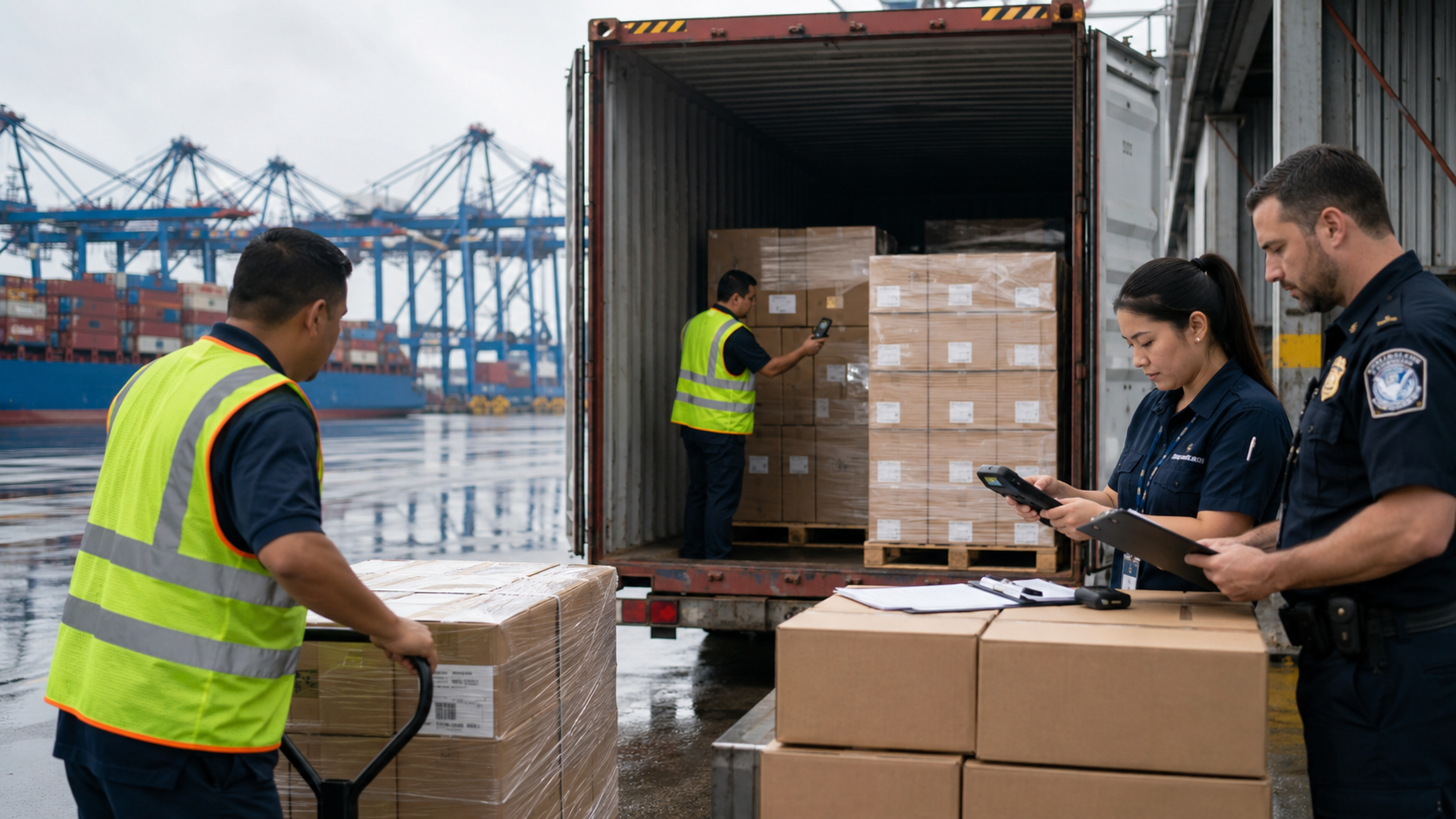
Regarding the benefits, Mogliati notes that operating this way “eliminates duplicate logistics, reduces costs, and speeds up timelines”. Its main advantage lies in the ability to avoid unnecessary movements.
However, that efficiency demands coordination. “Compared with a domestic model, the added difficulty lies in coordinating multiple jurisdictions, correctly defining the IOR and legal responsibility, and avoiding compliance errors at origin and destination”, García warns. “With an experienced forwarder and broker, plus an aligned 3PL/FBA operation, the process becomes standard and scalable,” he concludes.
When the company builds the chain correctly, the merchandise can leave the country of origin, enter the United States through formal import procedures, move into local storage, and supply different sales channels. Risk increases when companies improvise the process without clear roles, proper trade documentation or a partner capable of coordinating origin, customs, and destination.
An Operating Base to Enter the US with Greater Control
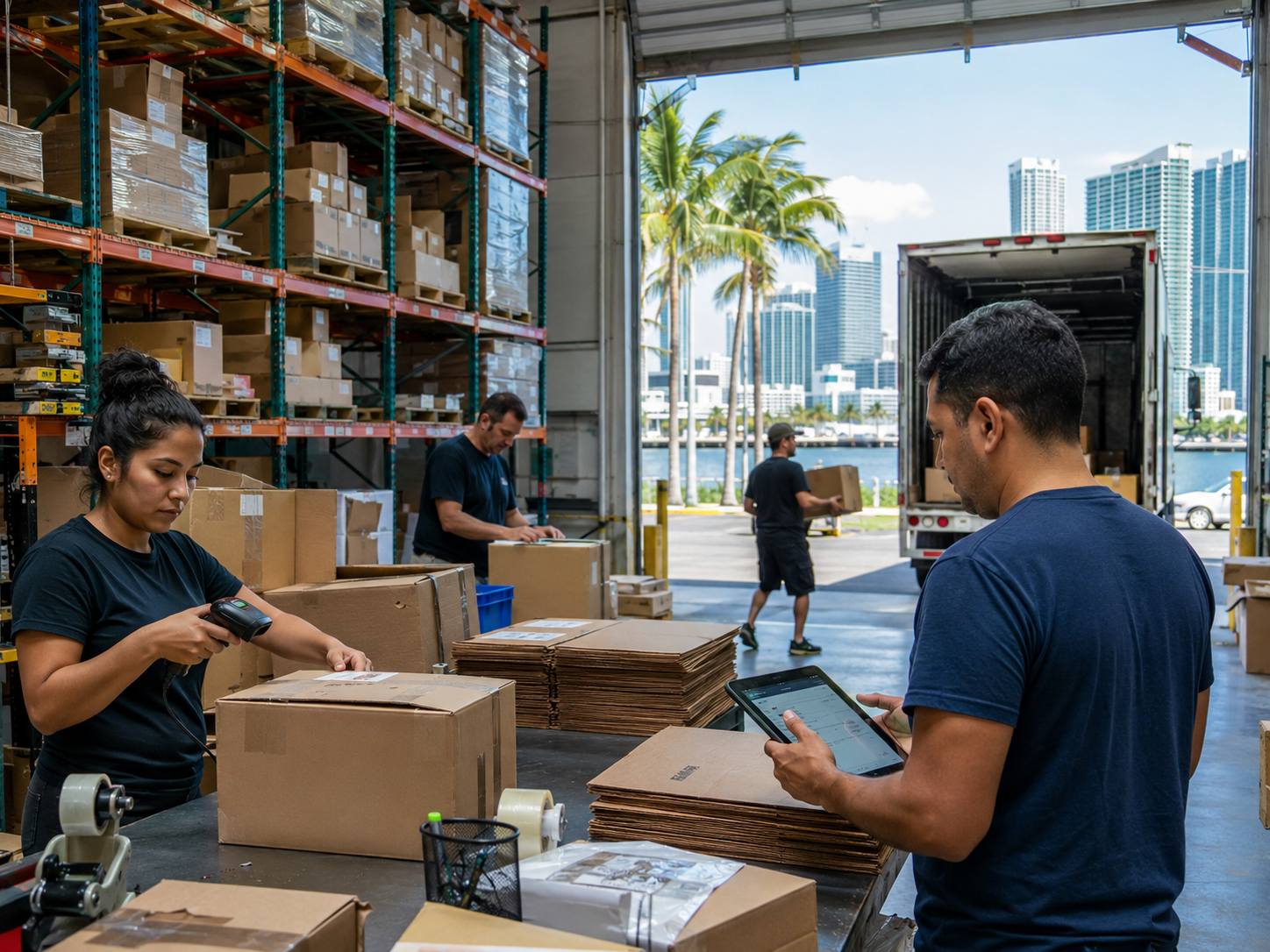
US expansion does not depend solely on market access. Companies also need the operational capacity to sustain activity as sales grow. To achieve that, logistics and customs compliance must connect with storage, fulfillment, stock traceability, and replenishment. Through its Miami warehouse, AeroWork helps brands and sellers operate in the United States without building their own infrastructure at the outset.
To learn how we can help you structure a logistics and customs operation ready to sell in the United States, contact the AeroWork team.